I joined as an early employee with two customers, no design system, and a product built to launch rather than scale. Over 2.5 years I built the design function, led quote-to-cash across four surfaces, and helped cut company onboarding from three months to three weeks.
RoleDesign Lead
TeamBuilt design practice
Timeline2.5 years
Customers2 to 10
01
A quote-to-cash platform built to launch, not scale
MonetizeNow is a quote-to-cash platform for BDR teams. It covers complex quoting with multi-year rates and scheduled price changes, contract generation via DocuSign, billing with dunning management, and usage monitoring for consumption-based products.
When I joined there were two customers, a junior designer, no design system, and a product built to get the first deals out the door. Every new customer revealed a pricing model the system had never seen before. The work was less about polishing screens and more about building a platform that could absorb edge cases without breaking what already worked.
What I owned
Design practice and junior designer mentorship
Quoting, onboarding, billing, and usage surfaces
Pragmatic design system and component interaction states
Translating customer pricing models into scalable flows
What shaped every decision
Customer-by-customer feature requests
Quote and PDF contract parity requirements
Founder tension on roadmap vs. reactive builds
Small eng team, limited QA bandwidth
02
Designing the full revenue workflow, not isolated screens
The product only works when all five surfaces connect. Company onboarding is the invisible product: before a BDR sends a single quote, the company loads products, pricing tiers, rates, and overrides. Every company's model is different, and designing for that flexibility without breaking the next customer was one of the core challenges.
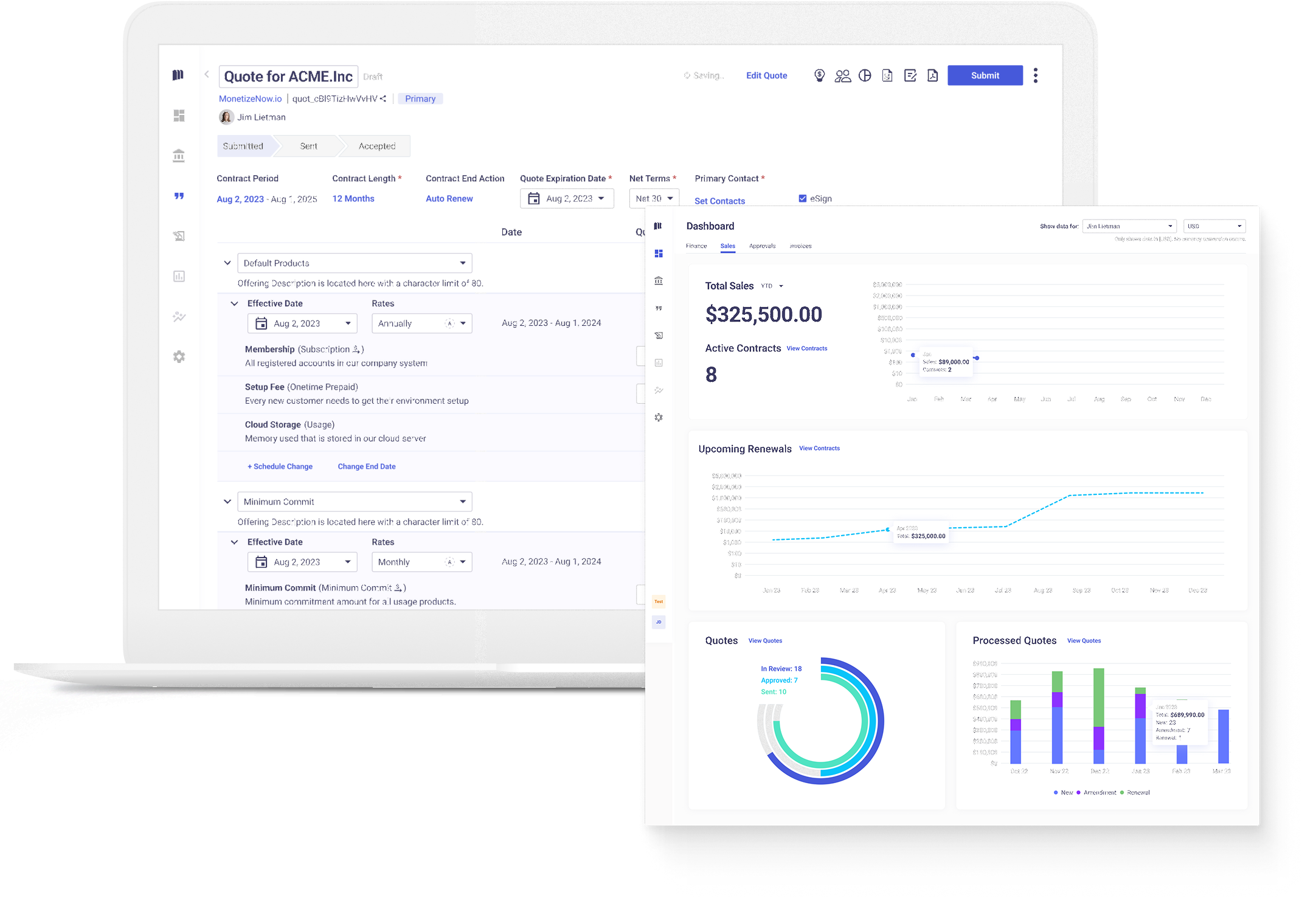
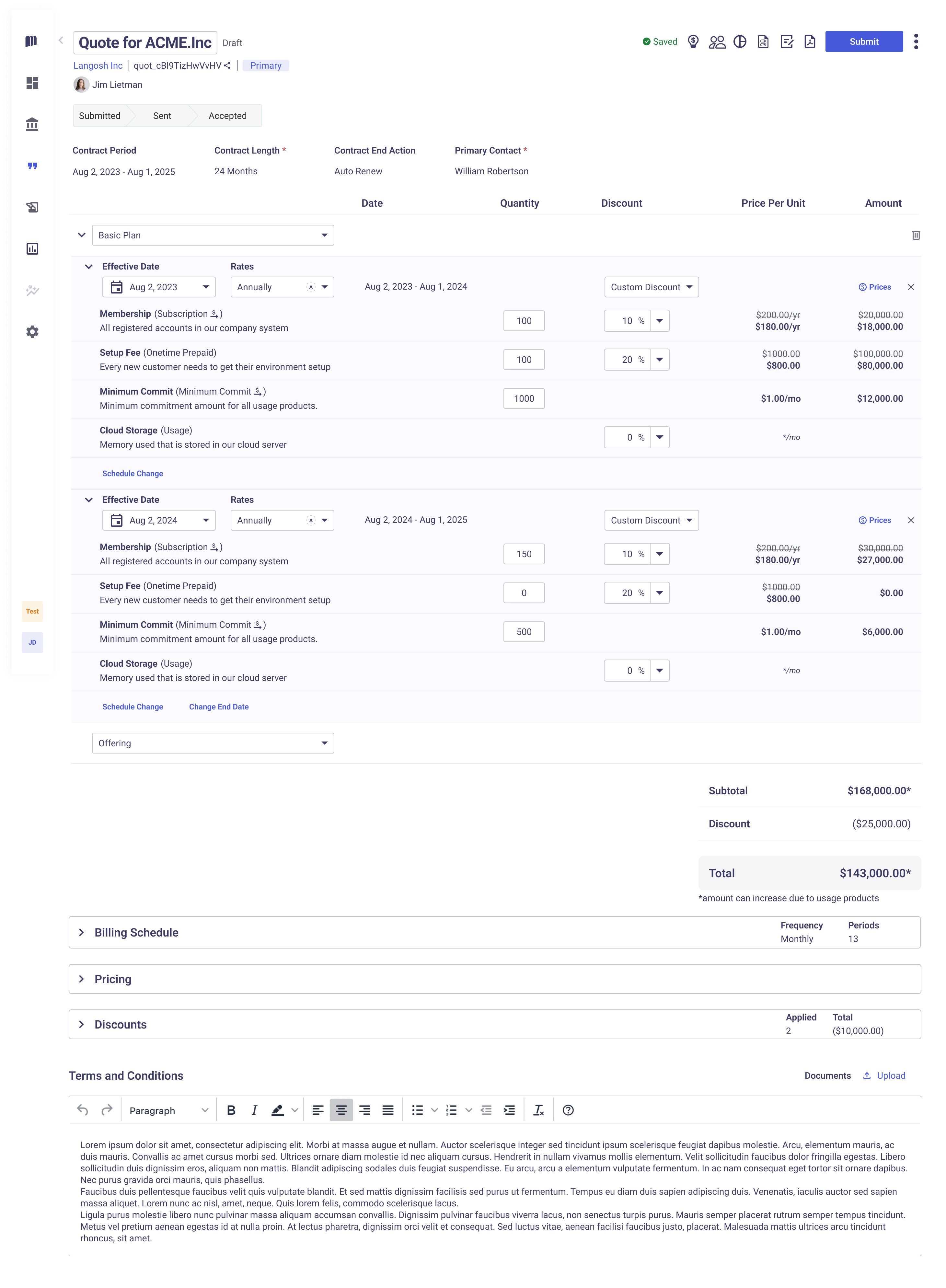
Quoting is the primary BDR workflow: configure the deal, set rates, schedule changes, send via DocuSign, generate the contract. The quote and contract must stay in parity because the quote is a binding document that exports as a PDF. As deal complexity grew, maintaining that parity without degrading the live experience became an ongoing constraint shaping every design decision.
The quote-to-cash platform:
01
Company onboarding
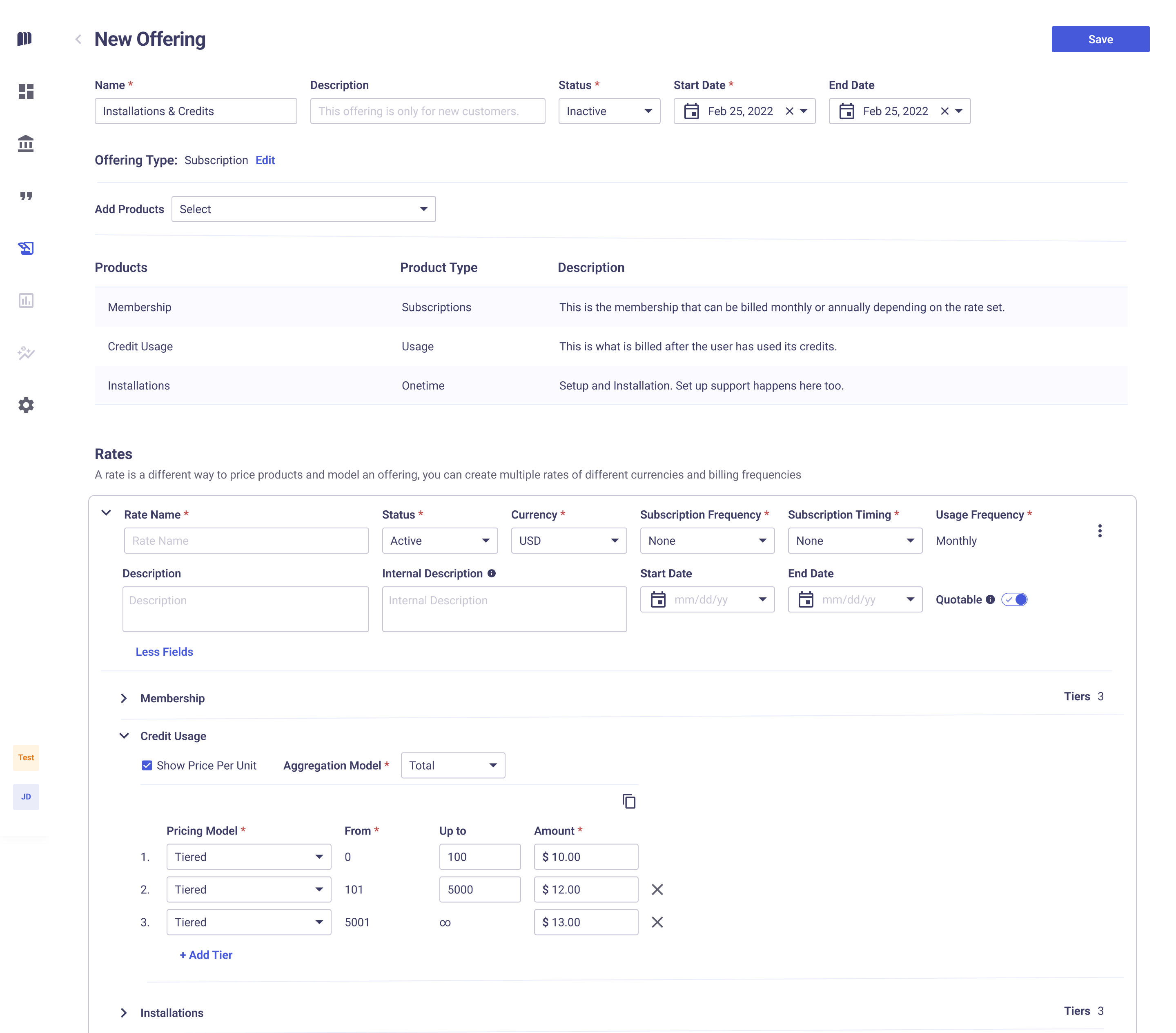
Load products, tiers, rates, and overrides before any quote goes out. The invisible product that determines whether everything downstream works.
Highest edge-case complexity
02
Quoting
Core BDR workflow. Configure deals, schedule rate changes, maintain live-tool and PDF contract parity.
03
Billing
Payment setup, dunning management, and native Stripe integration.
04
Usage monitoring
Track consumption against quoted limits through customer-facing dashboards.
05
Self-service onboarding
Reduce eng dependency so mid-size companies could configure and launch without a three-month handholding cycle.
Key ops outcome
Company onboarding
03
Where design met product complexity
Three constraints shaped the majority of design work over 2.5 years. They were never fully resolved, which meant every new customer forced a tradeoff between accommodating the request and protecting the platform.
01
Quote to contract parity
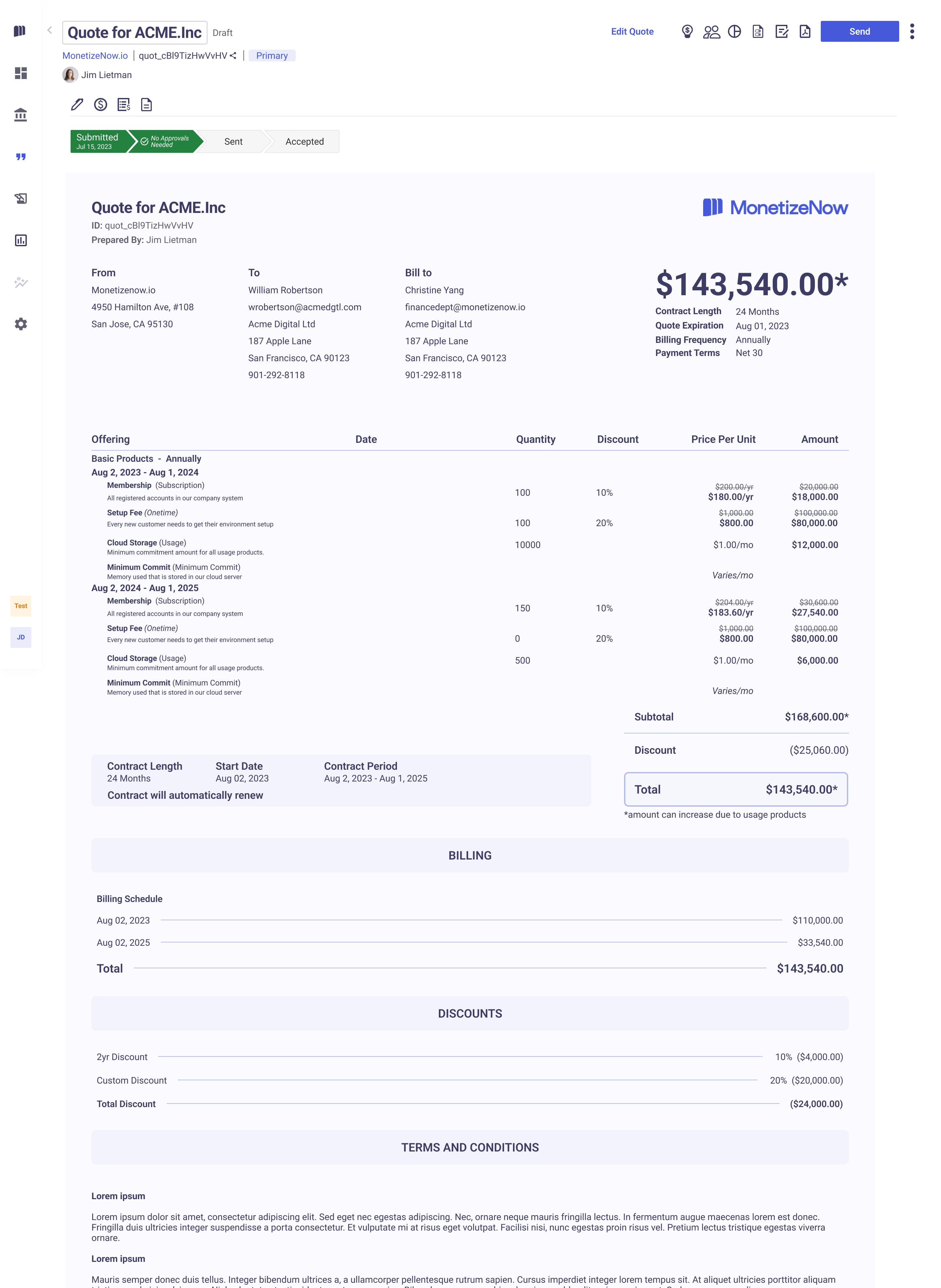
The same data had to work as a live interactive tool for the BDR and as a formatted exportable PDF contract. Every increase in deal complexity put pressure on both, and multi-year scheduled changes made keeping them in sync an ongoing design constraint.
02
Onboarding with no ceiling on edge cases
Each new customer revealed a pricing model that needed to be absorbed without breaking existing flows. Automatic overrides on manual overrides on tiered rates. The system had to stay self-service through all of it.
03
No roadmap, only customer requests
Product direction shifted with every new signature. Two founders had different views on building a defined roadmap versus responding to requests. That tension was unresolved when I left, and it shaped whether design work generalized or patched.
The quote exports directly into the contract. Same deal, same line items, two formats: the live BDR tool and the PDF the customer signs.
Quote
Contract
04
Building the design function under startup pressure
The pattern was consistent: the CEO and CTO brought a customer's pricing model and asked me to accommodate it without breaking existing flows. Absorbing new requirements without regression defined most of the design work. Alongside that, I built a pragmatic design system, mentored a junior designer, and pushed for product decisions that would scale beyond the latest deal.
The system was built to move fast, not to be complete. No documentation site, no Figma library with full coverage. Enough shared foundations that no one rebuilt pages from scratch. The most consequential decision was building explicit interaction states into every component. Junior engineers removed hover and focus states if they were not shown in designs, so I built them directly into components as prototype interactions. Not polish, but the only reliable way to make sure they shipped.
What we standardized:
01
Layout and navigation
Shared page structure across quoting, onboarding, billing, and usage so each surface felt like the same product.
02
Core components
Buttons, inputs, tables, and modals reused across workflows instead of one-off builds per customer request.
03
Interaction states in the component
Hover, focus, disabled, and error states baked into prototypes so engineering couldn't drop them during implementation.
Highest-leverage system decision
04
Domain patterns
Reusable patterns for rate tables, tier configuration, and quote line items that scaled as pricing models got more complex.
The founders pushed back on inline formula support in quoting. I believed BDRs needed to calculate rates directly in the quote. It shipped, and users told the founders it was their favorite feature.
Life after the quote
Quoting was only part of the promise. A true quote-to-cash platform has to work after the deal is signed: tracking what closed, what is up for renewal, and whether revenue is landing the way the quote predicted. BDRs care about their own performance. Leadership cares about pipeline health, recognized revenue, and forecast accuracy. Both need visibility, but not the same view.
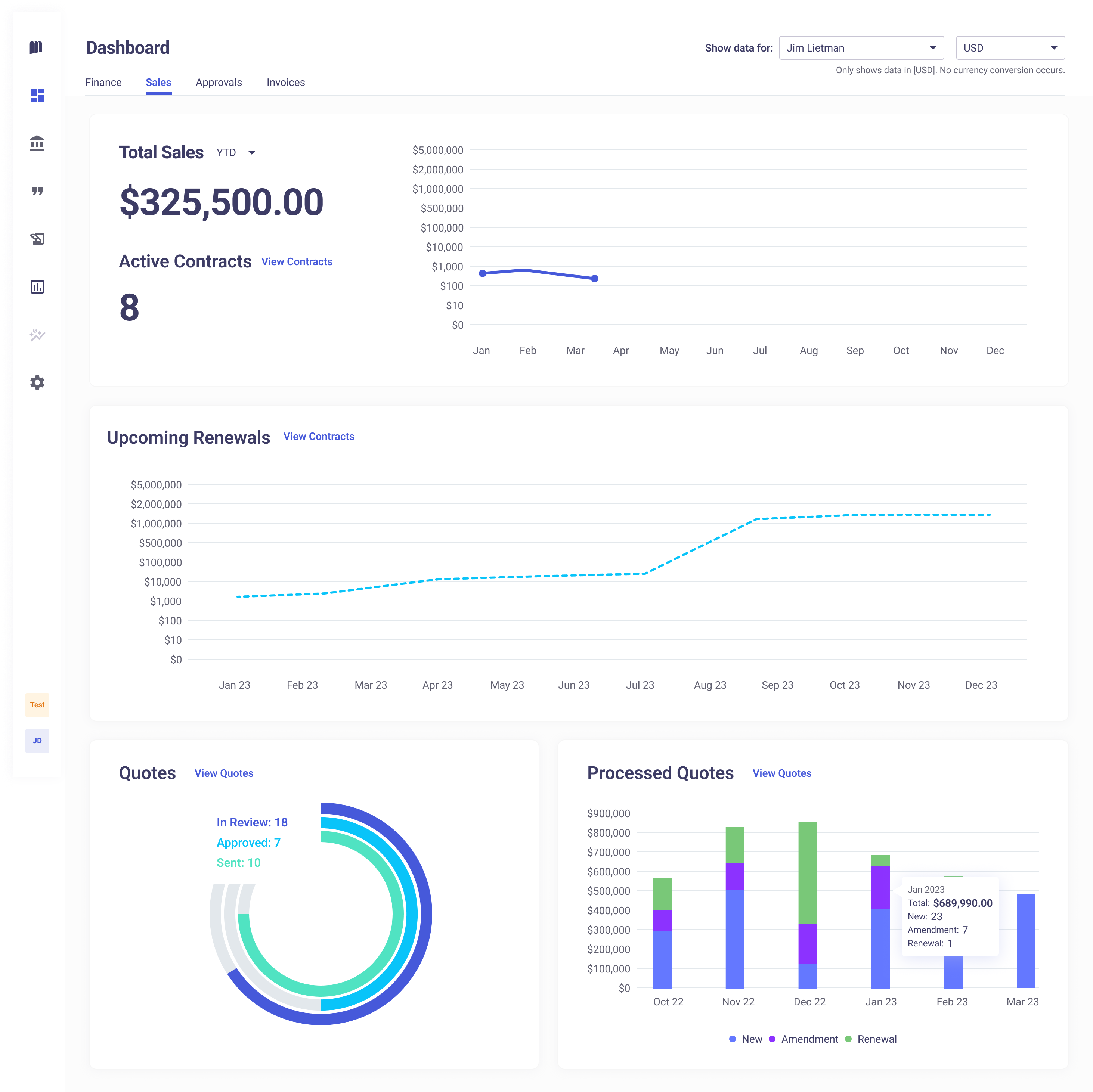
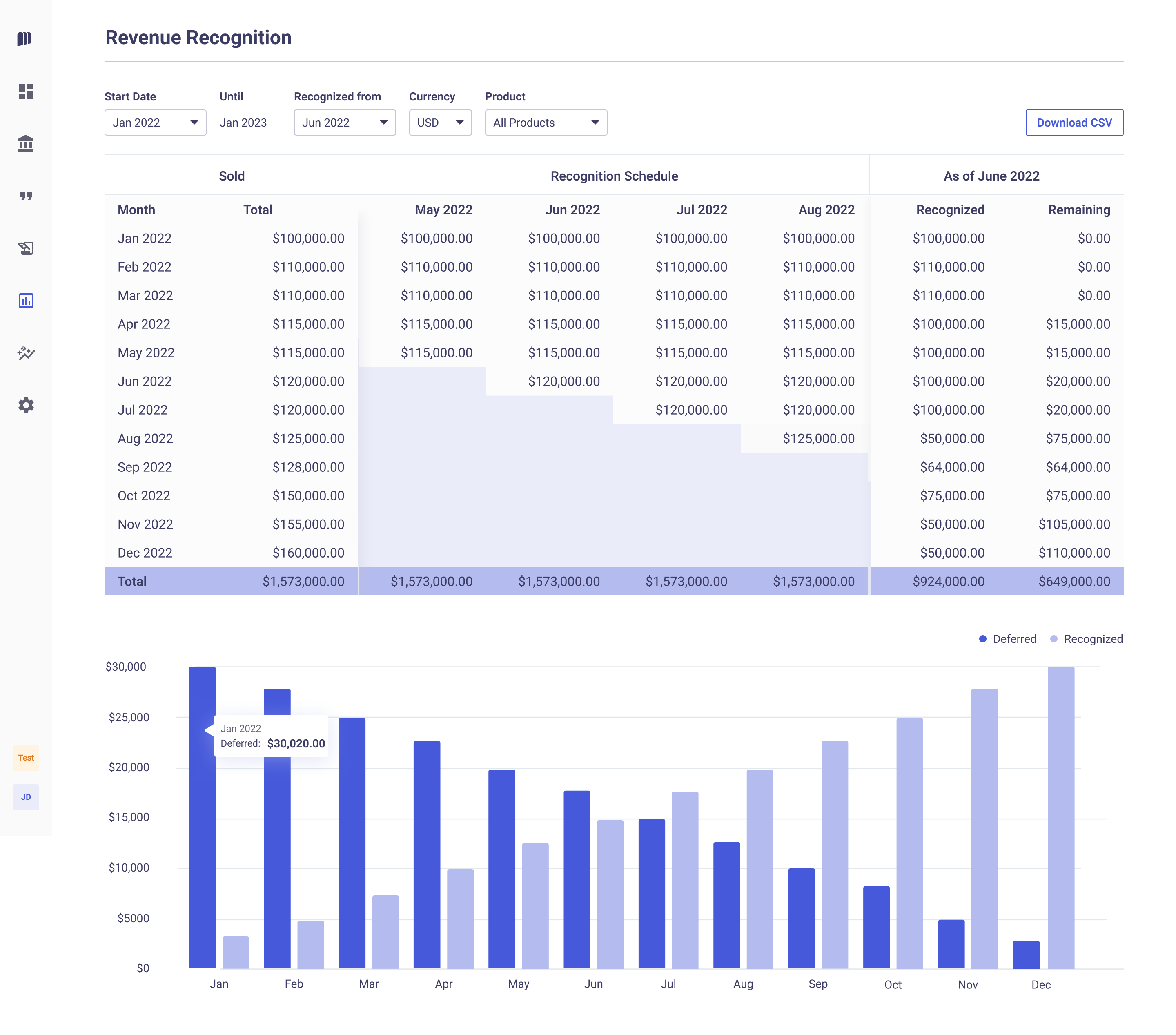
The dashboards were how we delivered that end-to-end experience. Not a bolt-on report exported to a spreadsheet, but performance and financial visibility inside the same product BDRs already worked in. I designed them so a rep could see how they were doing and a leader could see how the business was doing, without either group leaving the platform to find answers.
For BDRs: personal performance, active contracts, and quote activity in one place.
Sales dashboard
For leadership: revenue recognition, deferred vs. recognized revenue, and the schedule behind every closed deal.
Revenue recognition dashboard
05
Impact and what changed
Customers compared MonetizeNow favorably to Salesforce, HubSpot, and DealHub on ease of use. Clean without clutter, fast adoption within BDR teams after launch. The clearest lesson from this role: feature requests are not a product strategy. Roadmaps exist so products evolve with intention, not just react to whoever signed last.
Onboarding
3 wks
To onboard a mid-size company, down from three months. 25+ BDRs per company onboarded in that window through self-service configuration design.
Reduced engineering handholding during setup
Platform could absorb new pricing models faster
Growth & adoption
5x
Customer growth over 2.5 years, from 2 to 10 customers. Consistent feedback on ease of use across every new customer.