After Sprinklr rolled out, we needed adoption up fast and a way to scale integration over time. I led discovery across 500 agents, reframed the problem for leadership, and shipped the first embed while defining how Shipt builds inside the platform going forward.
RoleLead Product Designer
PartnersPM, Engineering, X-Team
Users500 CS agents
ScopeDiscovery, strategy, widget design
01
A platform investment that wasn't paying off
Sprinklr is Shipt's customer experience platform. The X-Team uses it to handle calls, chats, and emails from members, shoppers, and delivery drivers. The company had invested heavily as a replacement for their previous tool. Going in, Sprinklr had shown the team how to leverage the platform within Shipt's systems and which capabilities would unlock the most value. After rollout, the immediate priority was adoption. The longer question was how to scale integration so we could keep building on what they'd shown us instead of starting over each time.
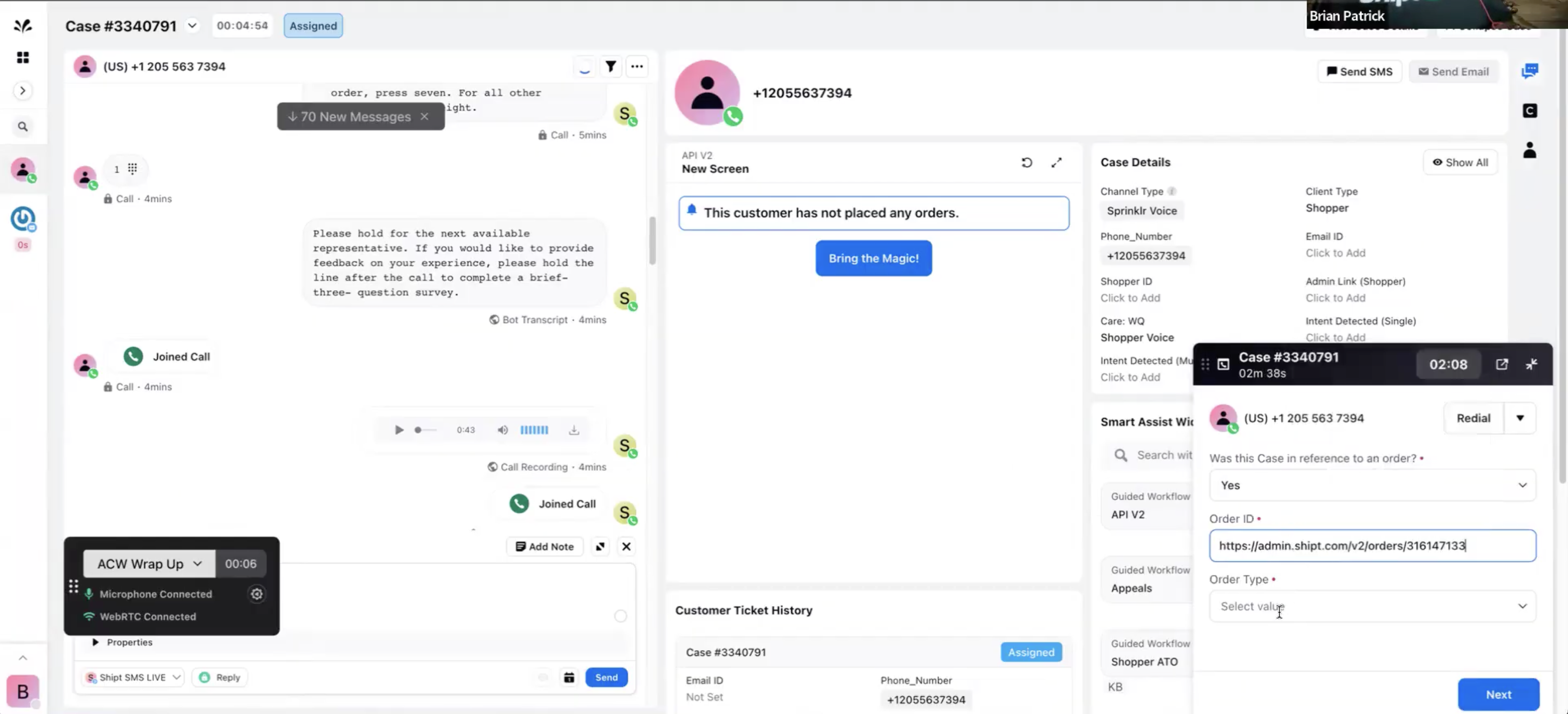
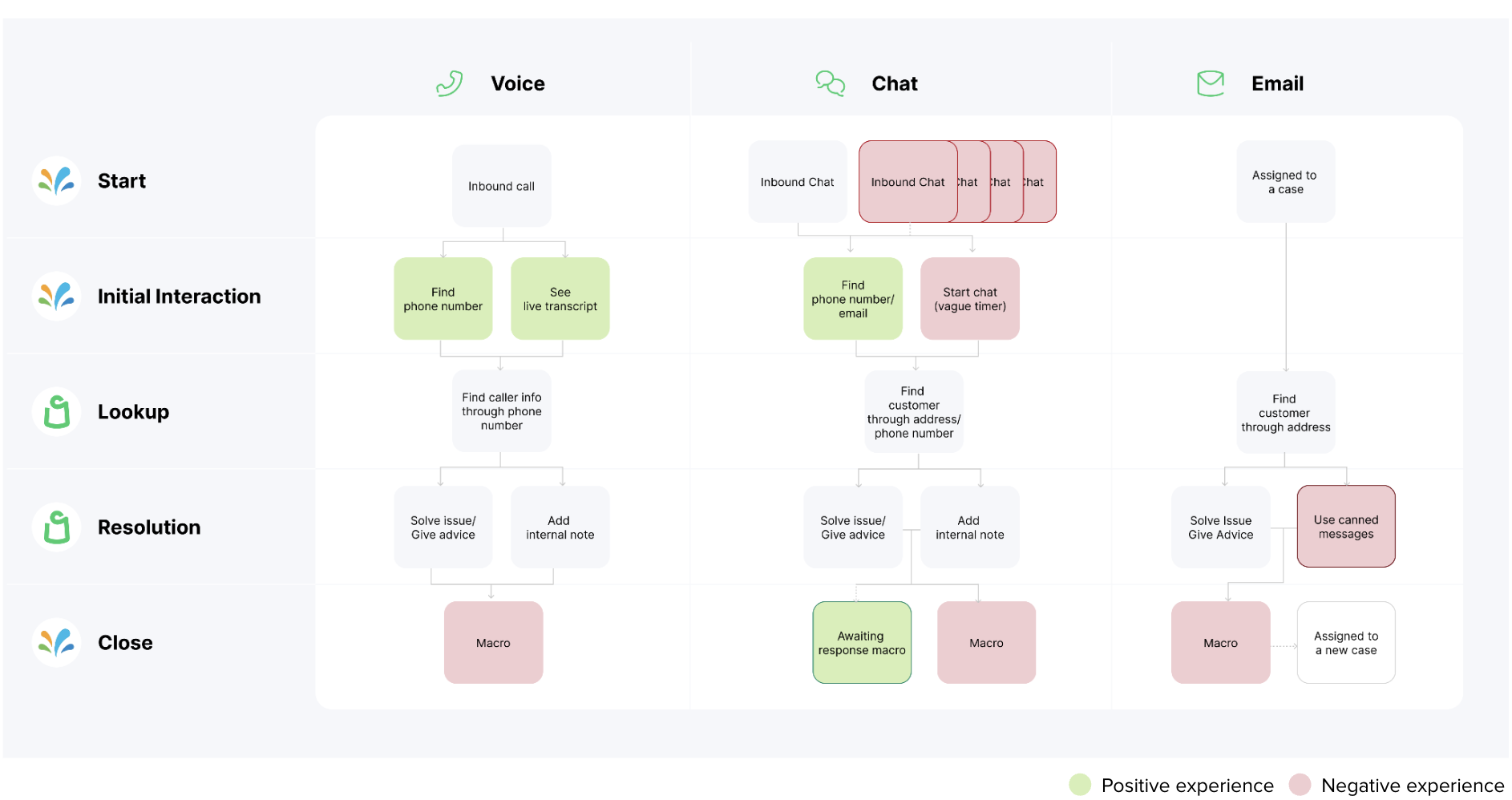
Three months after launch, results weren't matching expectations. I was brought in to find out why. Shadowing agents during live sessions showed the tool wasn't broken, but it didn't know enough. Performance is measured on handle time, which affects metrics and pay, so agents had built workarounds: Admin, Shipt's internal tool, stayed open in a separate tab because almost everything they needed during a call lived there, not in Sprinklr.
Before
Agent workaround
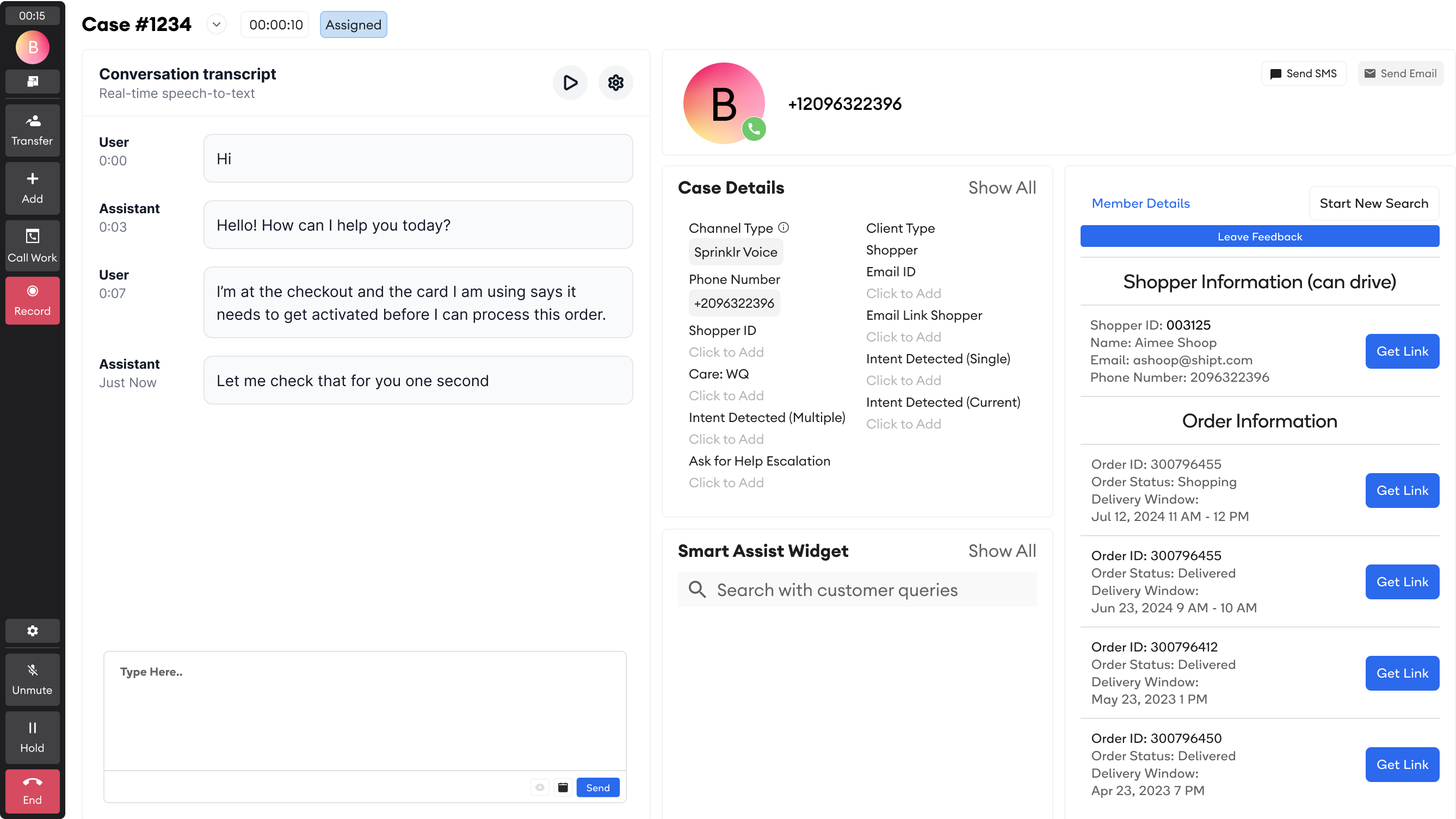
Admin stayed open in a second tab for member details, order history, and shopper payment info before every interaction, so agents were context switching before the call even started.
02
Reframing partial adoption for leadership
The designs were built to scale from the start: reusable patterns inside Sprinklr's constraints, not a one-off embed. With my PM and one engineer, we also laid the foundation for how integration work should run going forward: what Shipt owns, what the platform controls, and how we'd expand capabilities from each proof point.
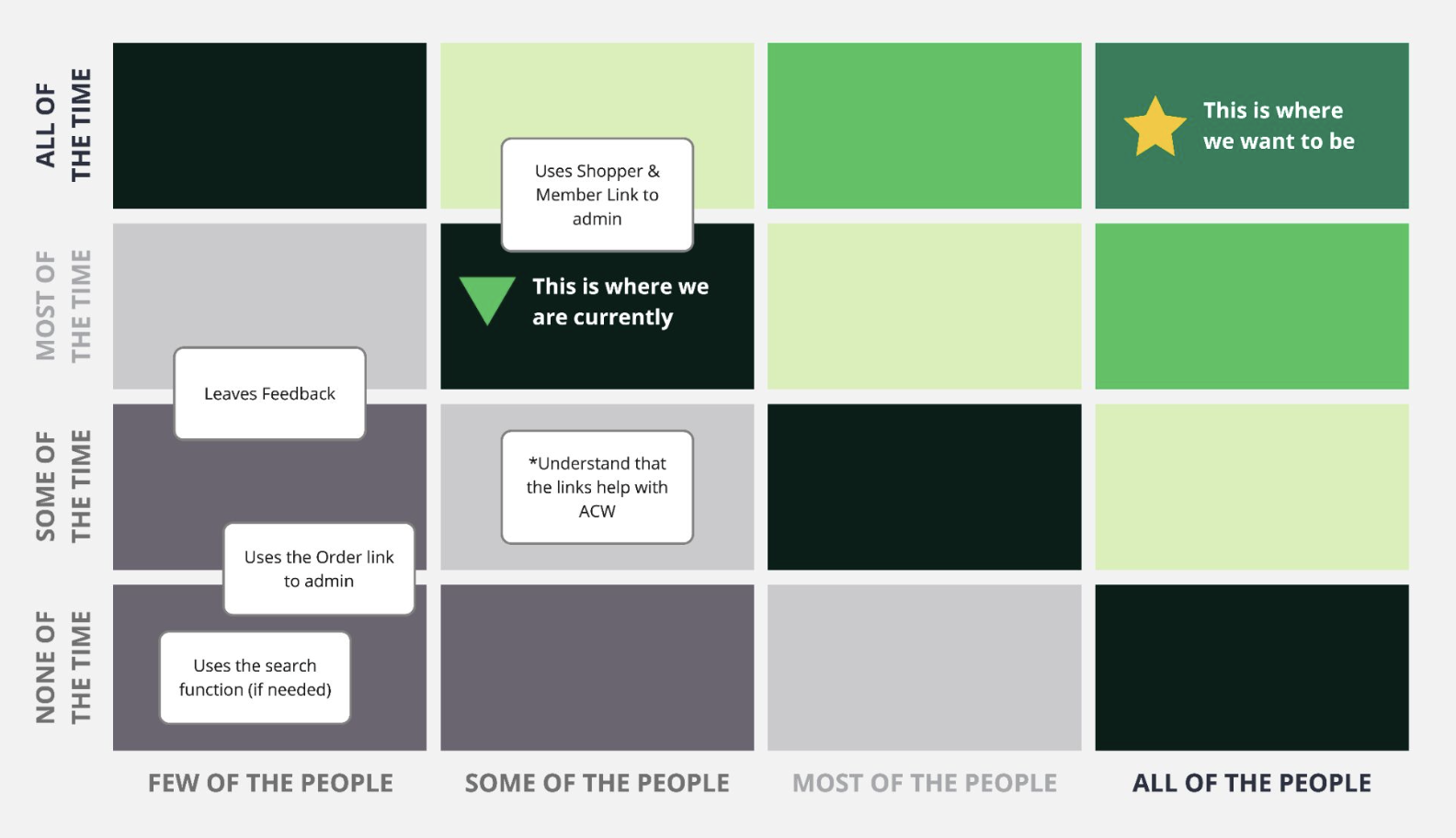
The gap wasn't a list of bugs but a pattern: agents used Sprinklr when they had to and worked around it when speed mattered. When I presented to directors and VPs, I mapped tool adoption against usage frequency. The goal was all agents, all the time, but shadow sessions showed where we actually were. The matrix made partial adoption visible in a way a findings doc couldn't, and that reframing changed the conversation. Leadership stopped asking why agents weren't trained enough and started asking what needed to exist inside Sprinklr for agents to stay. I prioritized a phased roadmap: fix context switching first, then address the friction agents flagged in research.
From that research, I defined a phased roadmap with my PM:
01
Admin widget in active case view
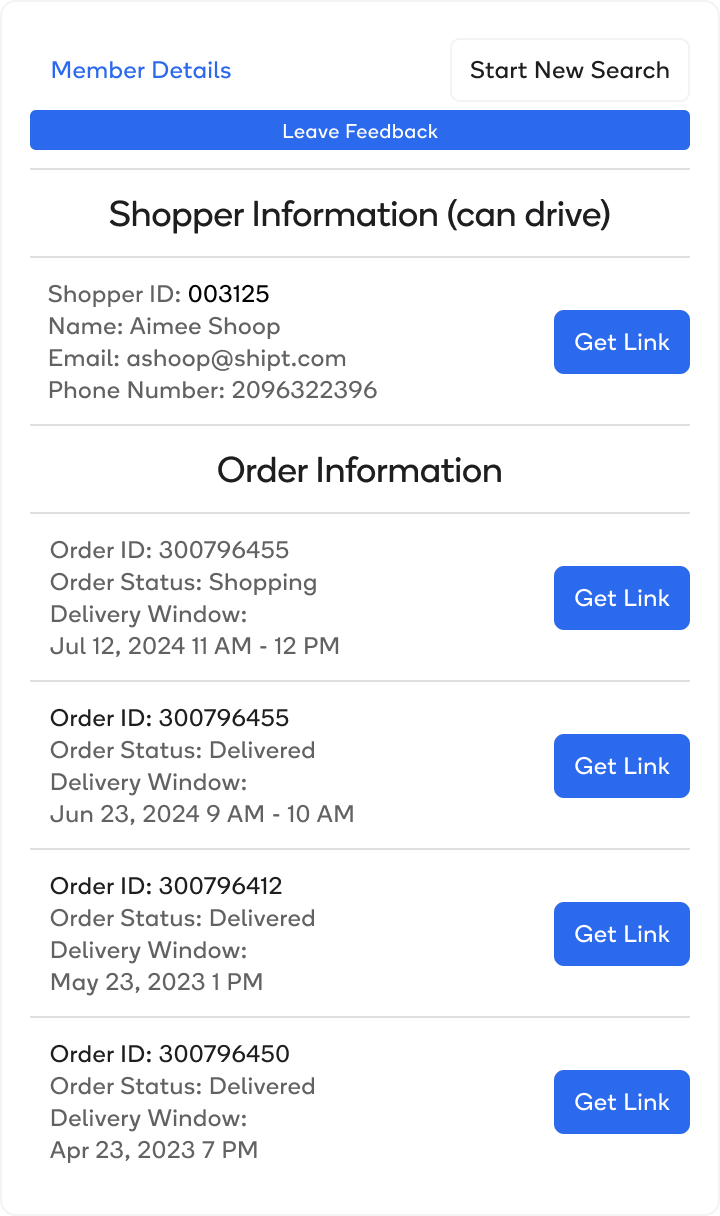
Surface member context inside Sprinklr so agents stop context switching to a second tab at the start of every call.
Led design, first initiative shipped
02
Canned responses in-product
Agents copied pre-written replies into a Google Doc because Sprinklr made them too hard to find. Stakeholders knew canned responses existed. They didn't know agents weren't using them from inside the tool.
03
Wrap-up code optimization
Too many questions, nothing pre-selected, timer running until wrap-up completes. Agents flagged the cost; leadership hadn't quantified it.
04
Personalized widgets by caller type
Members, shoppers, and last-mile drivers need different context. A shopper calling about a denied transaction should land on payment info, not a generic profile.
05
Chatbot and IVR parity
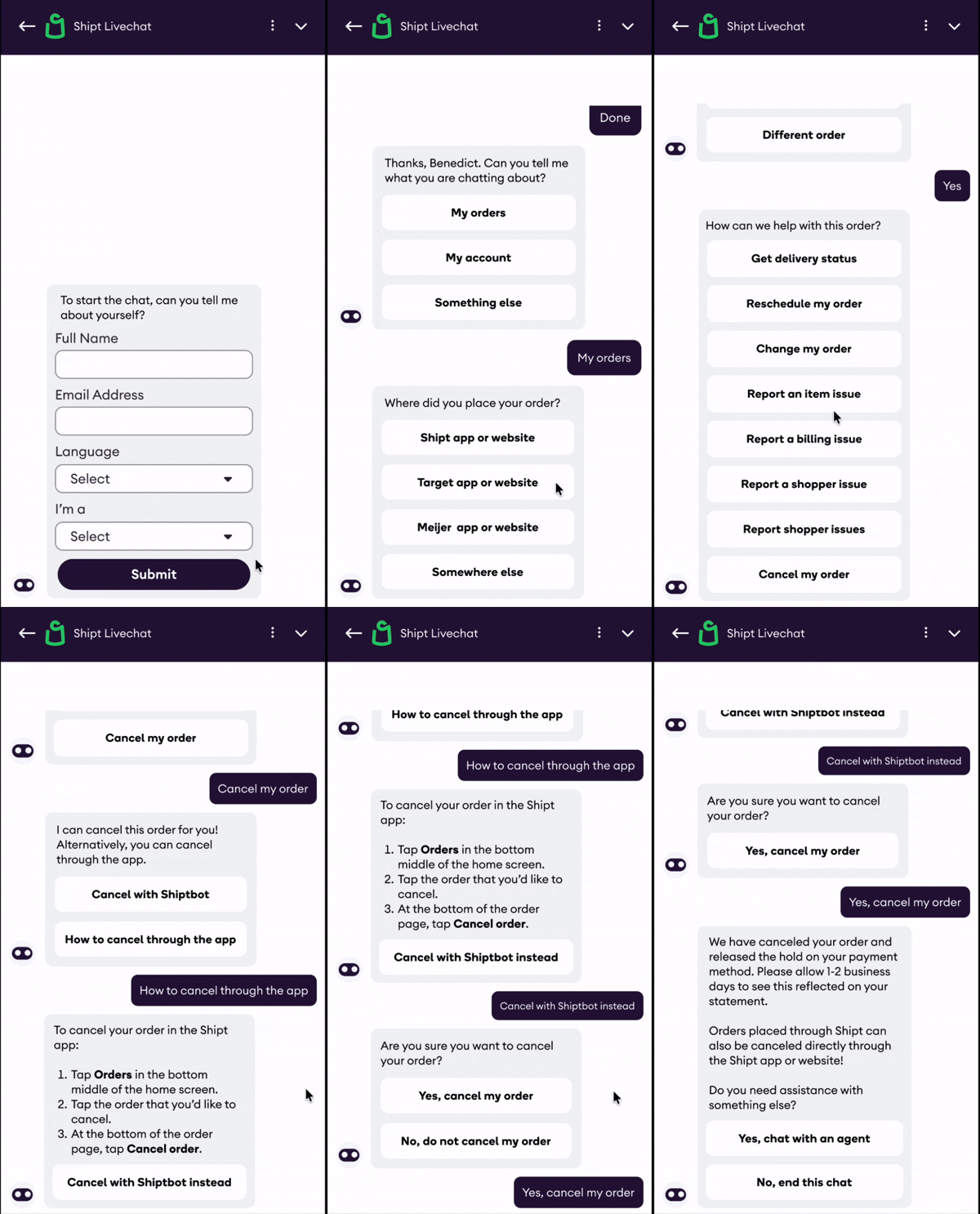
Resolve more cases before they reach a human agent. Consistent interaction model across text and voice.
03
Designing inside someone else's platform
The widget was the first of five roadmap items and the first test of that integration model. I led it first because context switching at call start was the highest-leverage fix and the proof point leadership needed to keep investing. Working inside Sprinklr meant we couldn't use Shipt's design system: their components, their visual language, and only a limited slice of the codebase. We couldn't lead with UI polish, so we led with information: what to surface, in what order, and how much cognitive load each interaction could carry. Every decision was made with the next integration in mind.
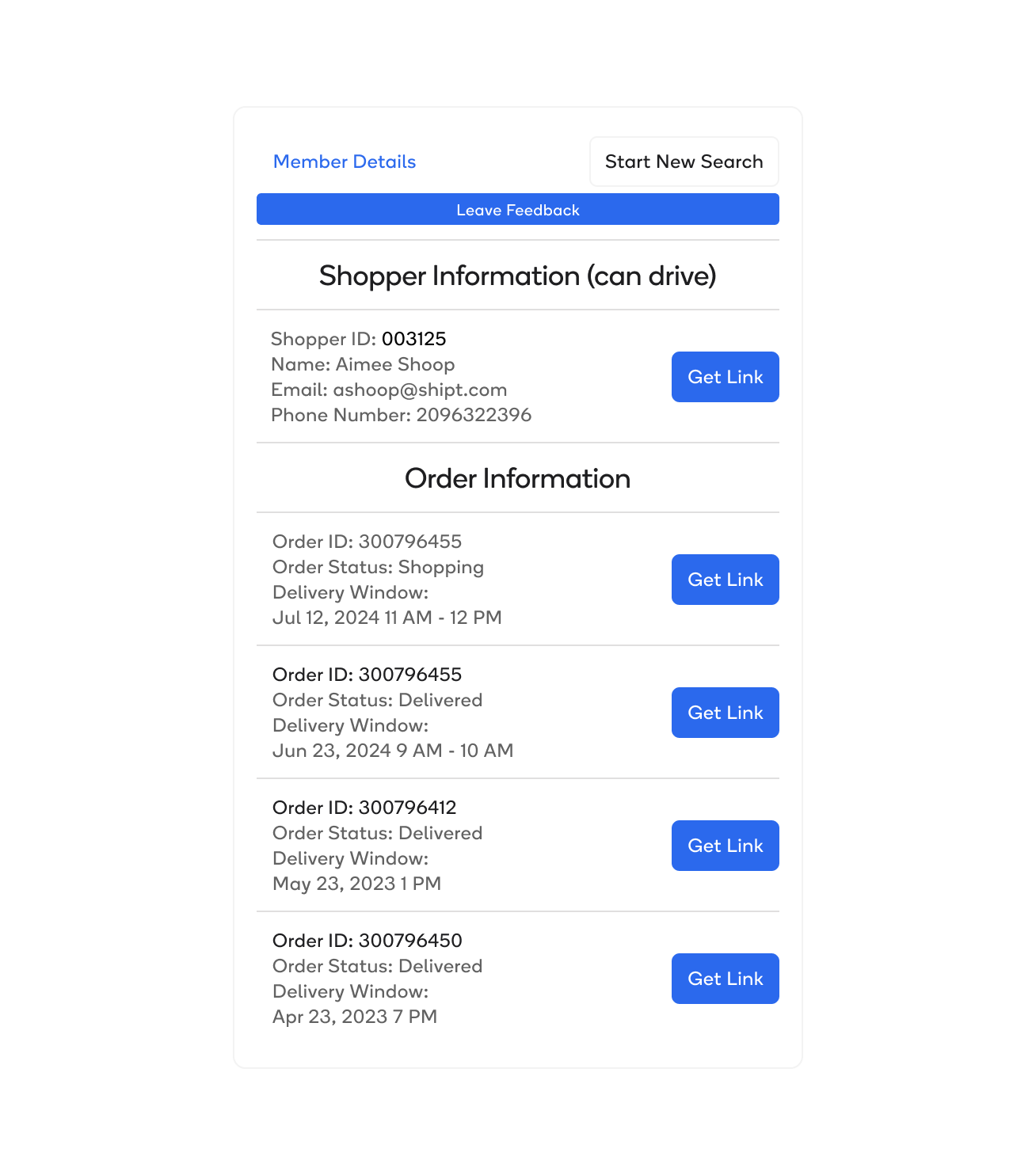
The widget embeds in the active case view. When a call or chat comes in, Sprinklr detects the caller. If there are multiple account matches, the widget lists them so the agent can verify quickly with the caller, faster than searching Admin and navigating a results page. Every field had to earn its place: we surfaced context at call start, handled ambiguous matches fast, and designed for speed rather than decoration because we couldn't hide behind visual decisions.
What we owned
Information architecture
What data to surface and in what order
Interaction patterns and flows
Cognitive load and accessibility decisions
What Sprinklr locked
Button styles and colors
Typography and fonts
Overall visual language
Direct external URL navigation
Before
After
04
Research that outlived the first ship
The discovery work didn't stop at the widget. Wrap-up codes led to an idea I brought to engineering: transcript and chat data already existed, and behavioral pattern detection could pre-select the most likely wrap-up codes so agents confirmed rather than filled from scratch. That became Shipt's first experimentation with AI on the X-Team, before the company had a formal AI feature strategy.
Canned responses, wrap-up optimization, and several other findings became officially roadmapped features for the X-Team product. A year and a half later, that team still references the original research when building new features. The widget also opened the door to chatbot and IVR parity: I designed the chatbot experience and the IVR team followed our interaction model for consistency between text and voice. Items 02 through 05 on the roadmap trace back to the same research cycle; the widget proved integrations could work inside Sprinklr, and everything else built on that credibility.
05
Impact and what changed
The Sprinklr investment started showing returns leadership could point to. Partial platform adoption became a blueprint for what integrations could become, with a prioritized path forward instead of a list of complaints.
Phase 1: Widget
1 min
Handle time reduced per call across 500 agents. At $0.80 per minute, that compounds across daily call volume.
Agents no longer open Admin at call start
X-Team directors cited cost reduction as a direct goal met
Phase 2: Chatbot & IVR
$6k
Monthly cost reduction from resolving ~500 fewer human-handled cases per month through chatbot and IVR parity.